
Learn
How to learn commercial real estate
The ideas to learn, in the order they build on each other, and why practising decisions helps them stick.
Updated October 6, 2026
Commercial real estate has a reputation for being hard to break into. The vocabulary is dense, the deals are large, and most people learn on the job, one transaction at a time. But the core of it is a small set of ideas that build on each other. Learn them in order, practice them on numbers, and the rest becomes detail.
Why it's hard to learn from reading alone
Most people can memorize that a cap rate is NOI divided by value. Fewer can feel what it means: that filling a half-empty building can add more value than any bargain on the purchase price, or that the loan which makes a deal great in a good year is the one that sinks it in a bad one. Those lessons usually arrive through experience, and in real estate experience is slow and expensive. A working broker might close a handful of deals a year; an investor might buy one building every few years.
That's the case for practice: worked examples, spreadsheets, case studies, and simulations that let you make the decisions and see the results quickly.
The core ideas, in order
- Net operating income. Income collected minus the cost of running the building. Everything else is built on it.NOI explained.
- Cap rates and value. Value = NOI ÷ cap rate. Once this clicks, you see why owners obsess over every dollar of income. What is a cap rate?
- Leverage. Loan-to-value, debt service, and the debt service coverage ratio (NOI ÷ annual debt service). Debt raises returns when things go well and magnifies losses when they don't.
- Returns on your own money. Cash-on-cash return (annual cash flow after debt service ÷ cash invested), and over a whole hold, the internal rate of return (IRR) and equity multiple.
- Value-add. Buying a building that underperforms, then raising its income through leasing, renovation and better management. This is where most investors create value rather than just buying it.
- Recycling capital. Selling, or refinancing a stabilized building to take cash out and buy the next one.
- Cycles. How interest rates, rents and cap rates move together, and why survival through a downturn matters more than squeezing the last point of return.
If you're new to the field entirely, start with what commercial real estate isand the four main property types.
Ways to practice
- Rebuild real listings. Commercial listing sites and broker offering memorandums publish rent and expense figures. Recompute the NOI and cap rate yourself, and look for what the seller left out.
- Build a simple spreadsheet for one building: income, expenses, a loan, and five years of cash flow. Change one input at a time and watch what moves.
- Read case studies and deal post-mortems, especially from downturns.
- Talk to people who do it. Brokers, property managers and lenders each see a different side of the same deal.
- Play a simulation to get many decisions' worth of feedback in a short time.
What a game can teach, and what it can't
A simulation is good at one thing books are not: compressing time. You can buy, lease up, refinance and sell a building over a handful of short sessions, and live through a whole market cycle in days rather than years, which shows cause and effect clearly.
It can't replace the real thing. Real deals turn on legal documents, lease clauses, inspections, tax rules, local zoning and people, and any game simplifies those heavily. Treat a game as a way to build intuition for the numbers, then check that intuition against real deals.
How CRE Tycoon fits in
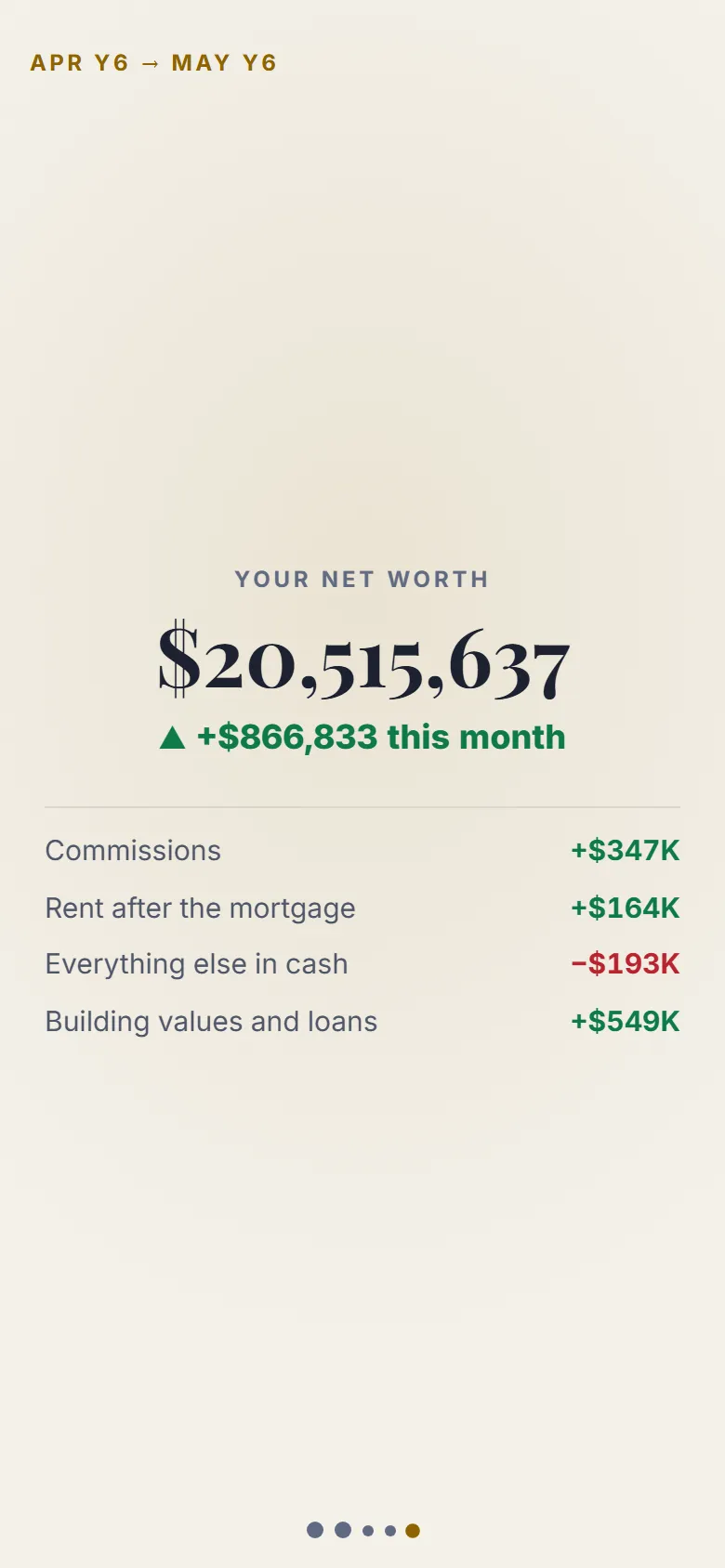
CRE Tycoon is a free commercial real estate game that walks through most of the list above (here's how the simulation works). You start as a broker with$100,000. Commissions fund your first down payment. The buildings you buy are valued at NOI divided by a cap rate, financed with a down payment and an interest-only loan, and leased up with business plans. Once a building is stabilized you can refinance it for cash or sell it, and the market cycle, a moving benchmark loan rate and rival brokers decide whether your timing was good.
Each turn is one month, and a career is 120 months, ten years of game time. A new month becomes available every real hour, and up to 6 can be banked, so it is designed to be played a few minutes at a time. Your final score is your net worth at the end, and the month-end report splits each month's change into commissions, rent after the mortgage, and the change in building values and loans, which is a good habit for reading any real portfolio too.
What it simplifies: leases are not negotiated line by line, income taxes come down to a capital gains charge when you sell, and the lender's rules are more forgiving than a real bank's. Those are good things to compare against reality once the basics click.
Where to go next
- Work through the articles in Learn in the order above.
- Look up a few local listings and calculate their cap rates.
- If you want a formal path, university real estate programs and industry bodies offer courses in finance, appraisal and leasing.
Try it on a real career
Free in your browser, on your phone or desktop. No download, no account.